How to make sofas on the sofa assembly line?
Soft Furniture Panel Conveying & Assembly System
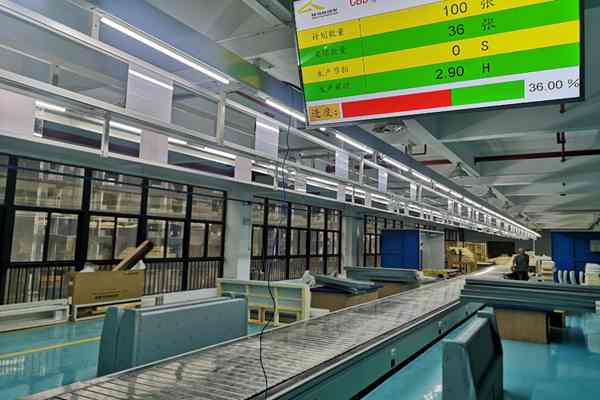
The picture shows a typical soft furniture panel conveying and assembly system. An electronic billboard above the line displays real-time data: planned quantity, actual output, and achievement rate. This visual management shifts modern sofa manufacturing from experience-driven to data-driven practices. The line uses a silver-gray metal frame, transparent protective partitions, and blue floors to create a clean, orderly flexible manufacturing space.
Production Line Shape & Transportation Mechanism
Unlike rigid home appliance assembly lines, sofa lines must handle large size variations, soft material shapes, and uneven assembly beats. The conveying system uses a wide-faced chain-plate or roller combination structure. The bearing surface is significantly wider than standard home appliance lines to stably load large parts like seats, backrests, and handrails.
The conveyor chain surface is anti-slip treated. Some sections also include pneumatic stop devices. These allow products to position accurately and stay at specific stations, rather than flowing continuously at a constant speed.
The line has ample operating space on both sides. The floor uses an epoxy resin self-leveling process, which is wear-resistant and easy to clean, with no debris or loose threads. Transparent partitions separate the assembly area from external storage lines. They ensure bright lighting and control dust cross-pollution, which is critical for fabric sofa cleanliness.
Modular Assembly Process
Sofa manufacturing is essentially a “skeleton and texture reorganization project.” The front end of the line features a wooden frame assembly area. Here, larch or plywood frames are nailed, reinforced, and stress-tested.
Core Assembly Stages
- Middle Assembly Stage: Blue soft-wrapped parts are visible. Workers align and bind high-density sponge or down coating to the frame. This relies on manual experience and pneumatic tools, and cannot be fully replaced by machines.
- Spring System Assembly: This is key to supporting performance. Special tensioning tools ensure consistent pre-stress in each spring group. Uniform tension between snake springs and elastic bands directly affects the sofa’s service life.
- Fabric Covering Stage: One of the most technically demanding steps. Workers stretch cut fabric or leather covers over the frame. They use hidden nail guns or zipper structures to fix the cover, ensuring no wrinkles and neatly rounded corners.
The picture suggests the rear end may be in the finished packaging preparation area. As large, irregular furniture, sofas require packaging planning at the end of assembly. Detachable armrests and split backrests are often designed to fit logistics container volume limits.
Data-Driven Beat Management
The hanging kanban’s core data reveals the line’s management logic: planned output 100 sets, actual production 36 sets, production cycle 2.90 hours, completion rate 36%. This reflects typical soft furniture manufacturing traits: long single-piece working hours, uneven process beats, and frequent line adjustments.
Unlike standardized home appliances, sofas cannot maintain a constant high-speed beat due to diverse styles, fabrics, and colors. Thus, the line’s core optimization goal is not simply speed, but shorter changeover times and reduced waiting waste between processes.
The electronic kanban connects to the MES system. Team leaders can identify bottleneck workstations in real time. They balance line load through dynamic personnel deployment or pre-assembly preparation.
Process Evolution Trend
Current sofa assembly lines are shifting from “people follow the line” to “the line follows people.” Some companies use AGV trolleys instead of fixed conveyor chains. This enables asynchronous flow of different sofa styles in the same space.
Robotic nailing and automatic cloth cutting equipment free workers from repetitive physical tasks. They shift to higher-value roles like fabric matching and quality inspection.
The line already has basic digital management and control capabilities. However, there is still room to improve flexible automation depth. For products blending industrial attributes and “manual warmth,” the ultimate goal of the assembly line is balancing standardized efficiency with personalized texture.
If you have any questions or needs about the automated assembly line, please contact us via email: yu.yalong@outlook.com